
WEB DESIGN & UX

Redefining Usability and Structure for
a Global AI Initiative

Redefining Usability and Structure for a Global AI Initiative

ROLE

Product Designer

EXPERTISE

UX/UI Design

YEAR

2025

Project description

TechEquity AI is an annual AI conference in San Francisco. The digital experience played a critical role in converting interest into attendance, yet the previous website underperformed due to fragmented navigation, an unclear value proposition for different audience segments, and high cognitive load when exploring the agenda.

I led the end-to-end product redesign of the core digital touchpoints - Home and Agenda - and built a scalable design system. My work focused on improving user flows, clarifying value for key personas, and reducing friction in agenda discovery through responsive layouts and high-fidelity prototypes.

TechEquity AI, an annual AI conference held in San Francisco, needed a fresh website design and a new design system to boost participant numbers. I led the end-to-end redesign of key digital touchpoints – the Home page, the Agenda page, and the design system – including crafting core user flows, responsive layouts, and high-fidelity prototypes.

My role

My role

As a Product Designer on a small, agile team, I executed the full redesign of the homepage and agenda page - two of the platform's highest-traffic areas - and spearheaded the creation of a unified design system. I conducted user research, competitive analysis, developed personas and user journey maps, and created wireframes and high-fidelity prototypes. I collaborated closely with the marketing team and developers to ensure the designs aligned with brand goals while remaining technically feasible and accessible.

As a Product Designer on a small, agile team,
I executed the full redesign of the homepage
and agenda page – two of the platform's highest-traffic areas – and spearheaded
the creation of a unified design system.
I conducted user research, competitive analysis, developed personas and user journey maps, and created wireframes and high-fidelity prototypes.
I collaborated closely with the marketing team and developers to ensure the designs aligned with brand goals while remaining technically feasible and accessible.

Timeline

Timeline

February - June 2025 (5 months)

Process breakdown:

  • User Research: Conducted a competitive audit and in-depth user interviews to understand the needs, motivations, and pain points of our target audience.

  • Ideation: Used creative techniques such as Crazy 8s and Mind Mapping to rapidly generate ideas and explore potential solutions. Developed initial sketches and low-fidelity wireframes to visualize core user flows.

  • Prototyping: Designed high-fidelity prototypes for key pages, including the Home page and the Agenda page, focusing on visual consistency, accessibility, and intuitive navigation.

  • User Testing: Validated prototypes with our primary user segments - individual and corporate attendees, speakers, and exhibitors - gathering actionable feedback through usability testing sessions.

  • Iteration & Handoff: Refined designs based on user feedback, established a scalable design system, and collaborated closely with the engineering team during handoff to ensure seamless implementation and resolve minor UI/UX challenges.

February - June 2025 (5 months)

Process breakdown:

  • User Research: Conducted a competitive audit and in-depth user interviews to understand the needs, motivations, and pain points of our target audience.

  • Ideation: Used creative techniques such as Crazy 8s and Mind Mapping to rapidly generate ideas and explore potential solutions. Developed initial sketches and low-fidelity wireframes to visualize core user flows.

  • Prototyping: Designed high-fidelity prototypes for key pages, including the Home page and the Agenda page, focusing on visual consistency, accessibility, and intuitive navigation.

  • User Testing: Validated prototypes with our primary user segments – individual and corporate attendees, speakers, and exhibitors – gathering actionable feedback through usability testing sessions.

  • Iteration & Handoff: Refined designs based on user feedback, established a scalable design system, and collaborated closely with the engineering team during handoff to ensure seamless implementation and resolve minor UI/UX challenges.

Challenges

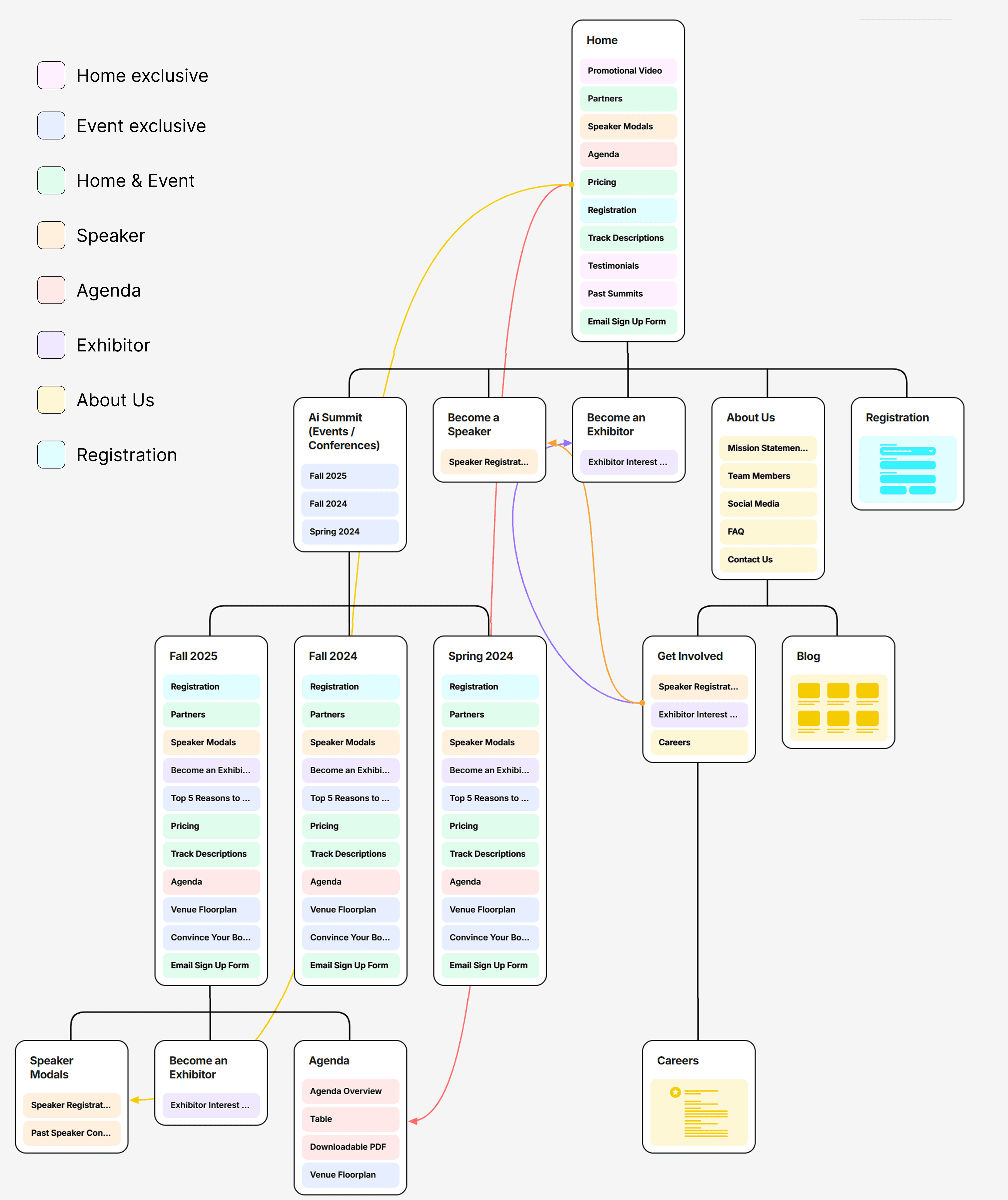
Site Map

The existing TechEquity AI website was hindering conference growth and participant engagement. Initial analysis revealed several critical challenges:

To address the navigation challenges, I developed a comprehensive site map that organized information hierarchically based on user needs and business priorities. The new structure featured:

Fragmented Visual System

The website relied on over 40 inconsistent UI elements, leading to a fragmented user experience.

Unclear Navigation

The original homepage had a cluttered layout and unclear user journeys, particularly for new visitors.

Poor Agenda Presentation

The event agenda page lacked essential information and featured an outdated design that didn’t align with the rest of the site.

  • Clear primary navigation for main user journeys (Attend, Speak, Sponsor, Press)

  • Secondary navigation for supporting content (About, Blog, FAQ, Contact)

  • Agenda as a standalone experience with advanced filtering

  • User account section for registered attendees with personalized schedules

Objectives

Establish a Unified, Scalable Design System

Consolidate inconsistent UI elements into a centralized, reusable component library to improve design consistency, development efficiency, and cross-team collaboration.

Simplify and Clarify 

the Homepage Experience

Restructure the homepage to prioritize essential content and streamline user journeys, in order to improve engagement.

Improve the Performance of the Agenda Page

Redesign the Agenda and interactive floor plan pages to enhance responsiveness, and deliver a smooth user experience during high-traffic virtual events.
Constraints

Site Map

  • Tight deadlines

  • Existing CMS / dev limitations

  • Content owned by stakeholders

  • Performance vs. Richness

To address the navigation challenges, I developed a comprehensive site map that organized information hierarchically based on user needs and business priorities. The new structure featured:

  • Clear primary navigation for main user journeys (Attend, Speak, Sponsor, Press)

  • Secondary navigation for supporting content (About, Blog, FAQ, Contact)

  • Agenda as a standalone experience with advanced filtering

  • User account section for registered attendees with personalized schedules

Trade-offs

Site Map

  • Simplicity vs. Completeness

  • Marketing vs. Usability

  • Flexibility vs. Clarity

To address the navigation challenges, I developed a comprehensive site map that organized information hierarchically based on user needs and business priorities. The new structure featured:

  • Clear primary navigation for main user journeys (Attend, Speak, Sponsor, Press)

  • Secondary navigation for supporting content (About, Blog, FAQ, Contact)

  • Agenda as a standalone experience with advanced filtering

  • User account section for registered attendees with personalized schedules

Key outcomes and results

  • 70% of tested users reported that the redesigned homepage felt "easier to navigate" and "less overwhelming" during usability sessions.

  • Engineers reported a 30-40% reduction in front-end development time thanks to the new component library and improved design documentation.

  • Bounce rate on the homepage decreased by an estimated 20-25%, based on early usage data and qualitative feedback.

  • 50% faster load times on the Agenda page after we moved live streaming to YouTube.

  • 8 out of 10 users successfully completed key tasks with fewer clicks and less hesitation compared to the original version.

  • 70% of tested users reported that
    the redesigned homepage felt "easier to navigate" and "less overwhelming" during usability sessions.

  • Engineers reported a 30-40% reduction in front-end development time thanks to the new component library and improved design documentation.

  • Bounce rate on the homepage decreased by an estimated 20-25%, based on early usage data and qualitative feedback.

  • 50% faster load times on the Agenda page after we moved live streaming
    to YouTube.

  • 8 out of 10 users successfully completed key tasks with fewer clicks and less hesitation compared to the original version.

Research

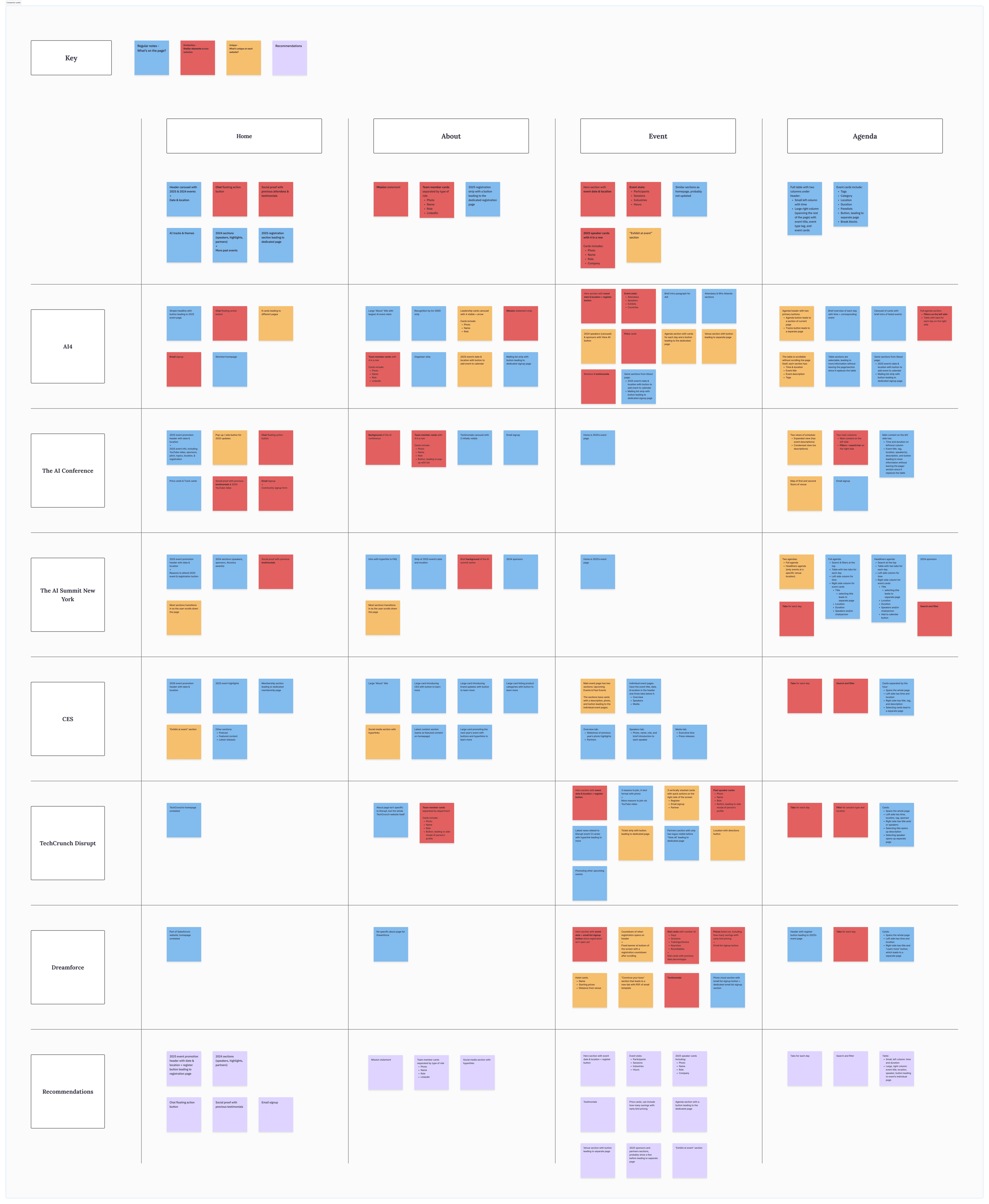
To deeply understand user needs and industry best practices, I conducted comprehensive research including competitive analysis, user interviews, and industry standard reviews.

Competitor Audit

I analyzed leading AI conferences and tech events including CES, AI Summit NY, TechCrunch Disrupt, and Web Summit. This research revealed three critical patterns that informed my design direction:

Establish a Unified, Scalable Design System.

Consolidate inconsistent UI elements into a centralized, reusable component library to improve design consistency, development efficiency, and cross-team collaboration.

Simplify and Clarify 

the Homepage Experience.

Restructure the homepage to prioritize essential content and streamline user journeys, in order to improve engagement.

Improve the Performance of the Agenda Page.

Redesign the Agenda and interactive floor plan pages to enhance responsiveness, and deliver a smooth user experience during high-traffic virtual events.

Personas

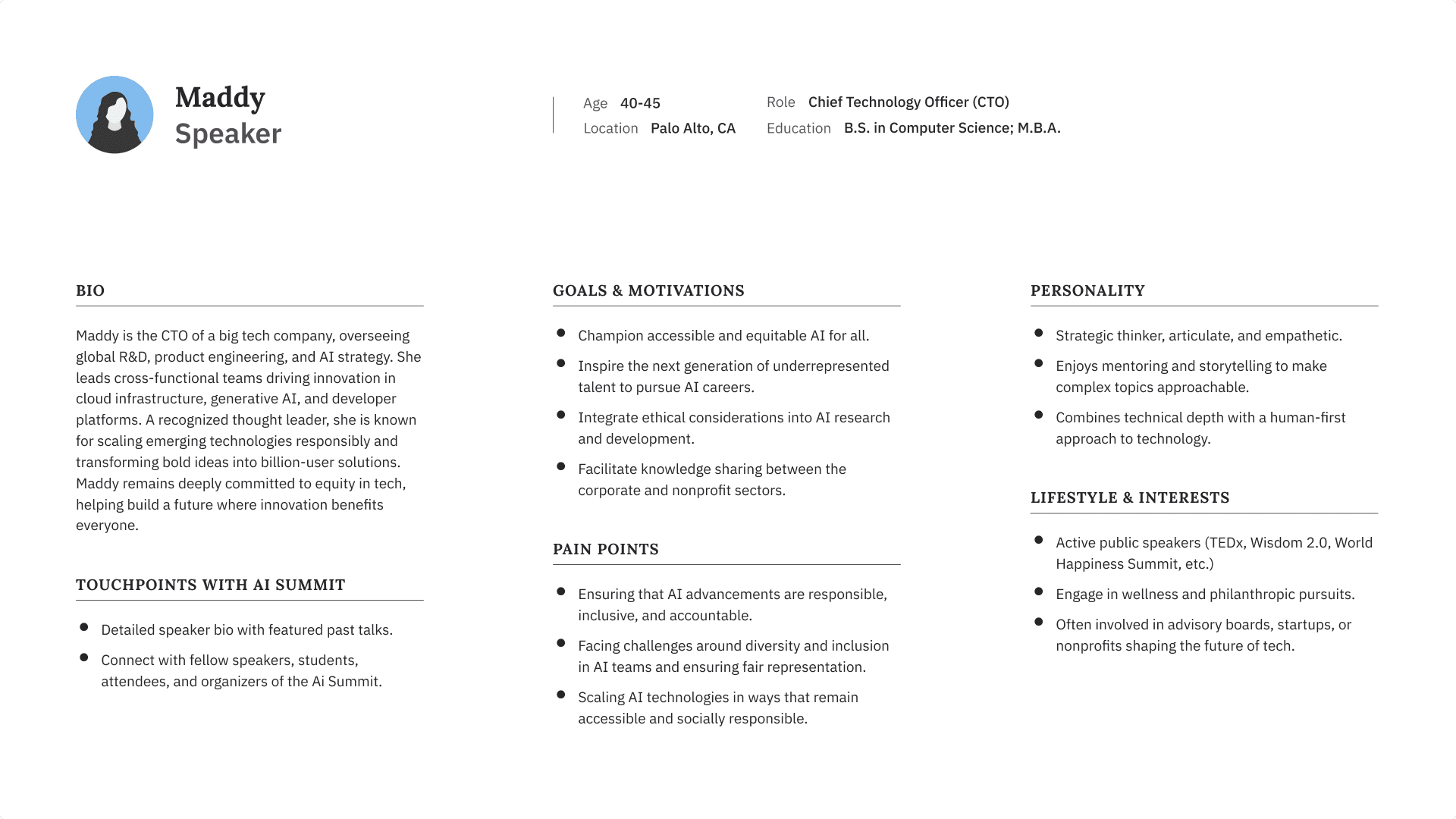
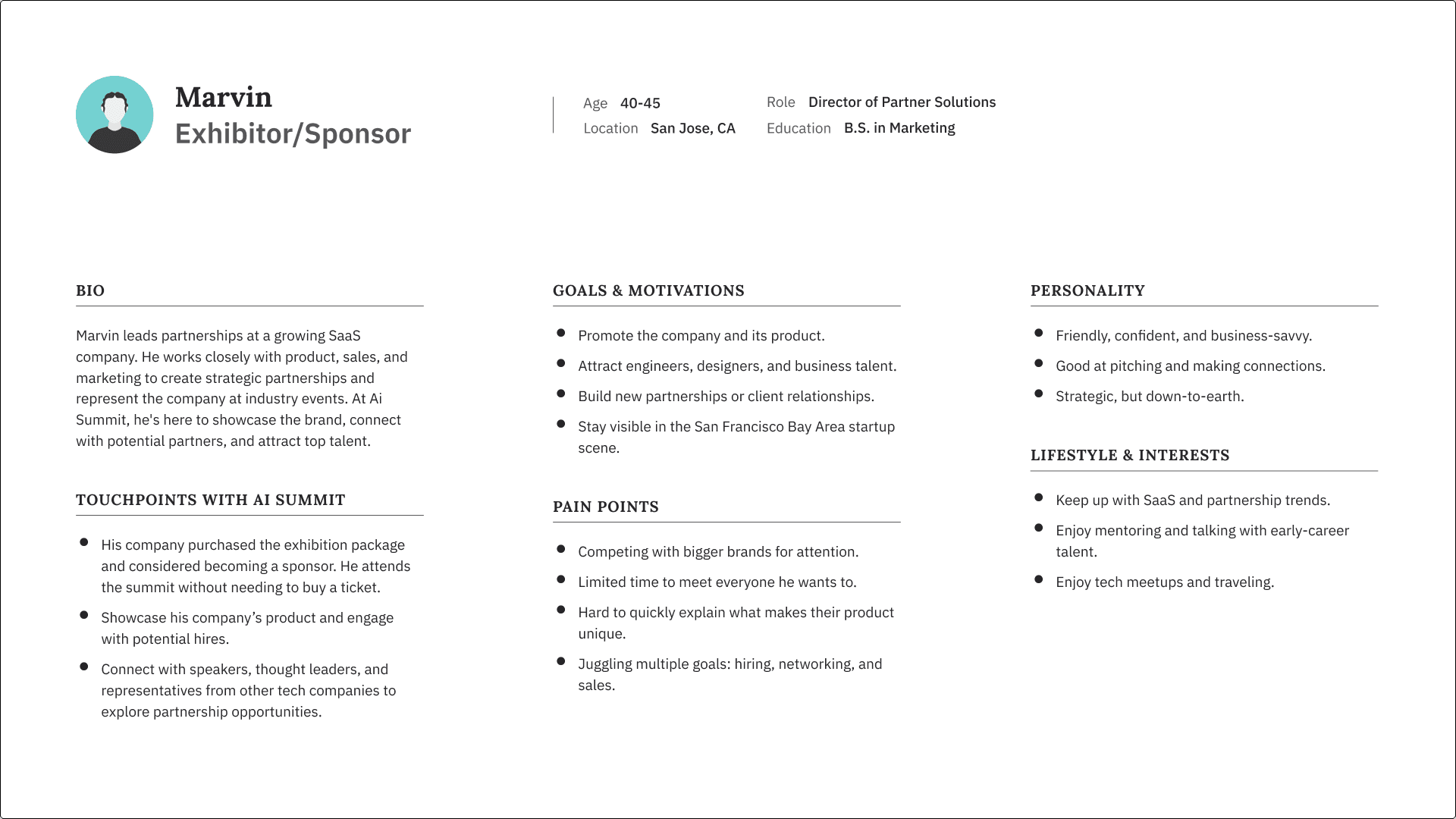
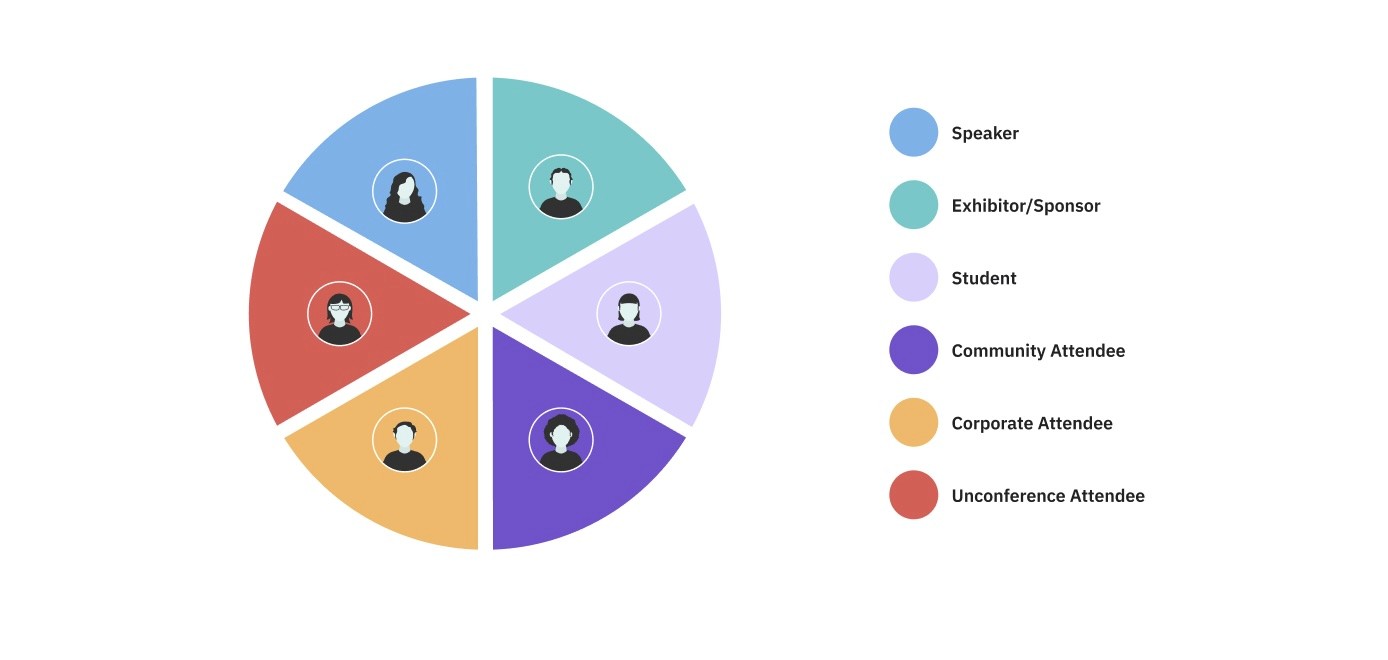
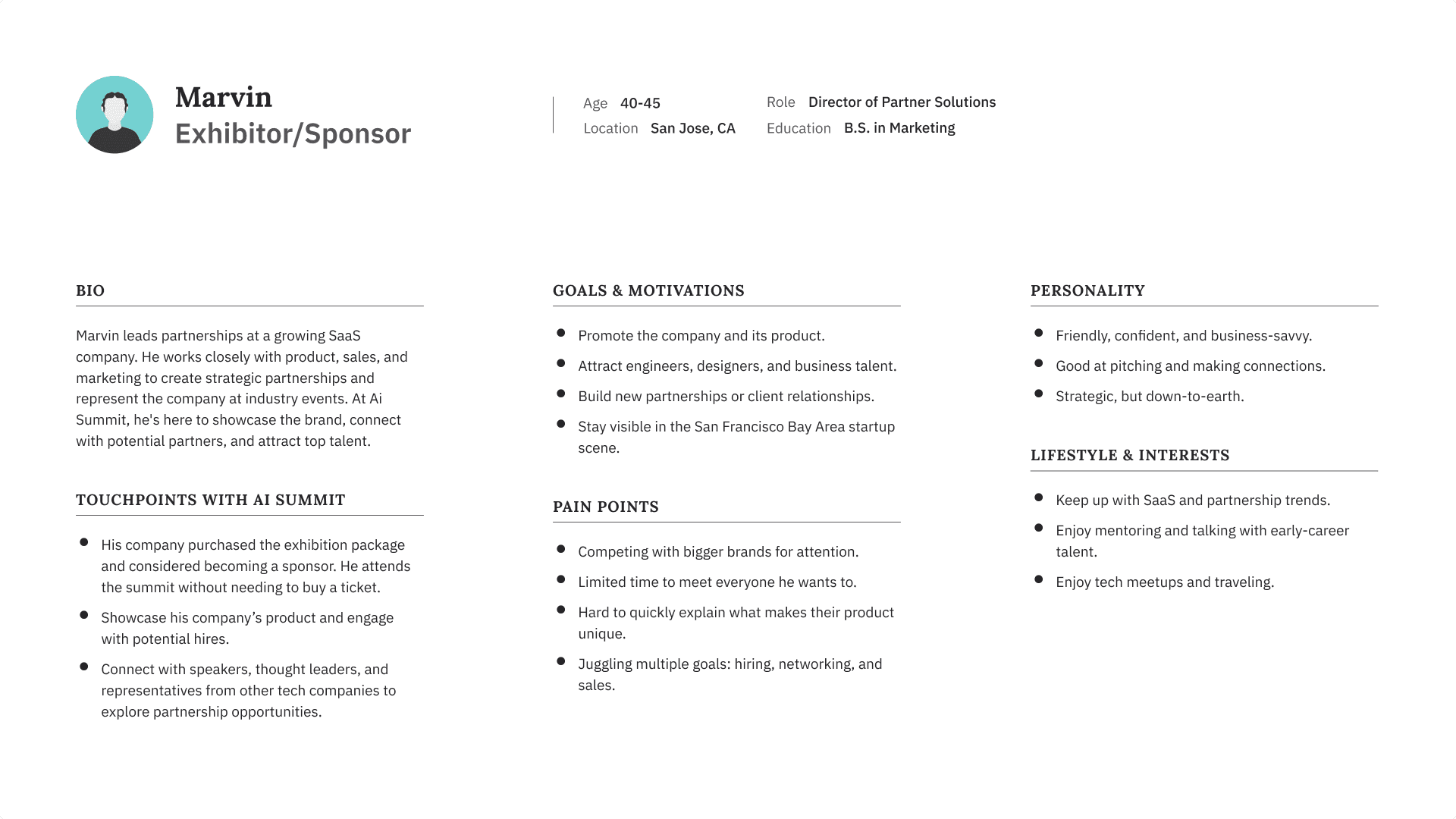
Based on user research and conference analytics, I developed six primary personas representing the main user segments:
Site Map

To address the navigation challenges, I developed a comprehensive site map that organized information hierarchically based on user needs and business priorities. The new structure featured:

  • Clear primary navigation for main user journeys (Attend, Speak, Sponsor, Press)

  • Secondary navigation for supporting content (About, Blog, FAQ, Contact)

  • Agenda as a standalone experience with advanced filtering

  • User account section for registered attendees with personalized schedules

Findings

The research phase revealed critical insights that shaped the design direction:

Diverse User Needs Require Flexible Navigation

Different user types (speakers, attendees, sponsors) have distinct goals and information needs. A one-size-fits-all approach was alienating key segments and reducing conversion rates.

Information Hierarchy Drives Engagement

Users needed to quickly understand the conference's value proposition and find personally relevant content within seconds of landing on the homepage. Dense content blocks without clear hierarchy were causing high bounce rates.

Agenda is the Core Decision-Making Tool

The agenda page is the primary factor in conference registration decisions. Users needed to easily filter by topic, time, speaker, and track to determine if the conference matched their interests and schedule.

Design Consistency Equals Credibility

The fragmented visual system was undermining the conference's professional image. Users associated visual inconsistency with lack of organization and quality.

Solution

Based on research findings, I designed solutions addressing each identified problem:

Unified Design System

Created a comprehensive design system with 15 core components, establishing clear typography hierarchy, consistent color palette, standardized spacing and layout grid, and reusable component patterns. This reduced visual clutter by 60% and created a cohesive brand experience.

Role-Based Navigation

Redesigned the homepage with clear entry points for each user segment, featuring prominent CTAs tailored to user goals, quick access to most-requested information, and visual hierarchy that guides users to relevant content.

Advanced Agenda Interface

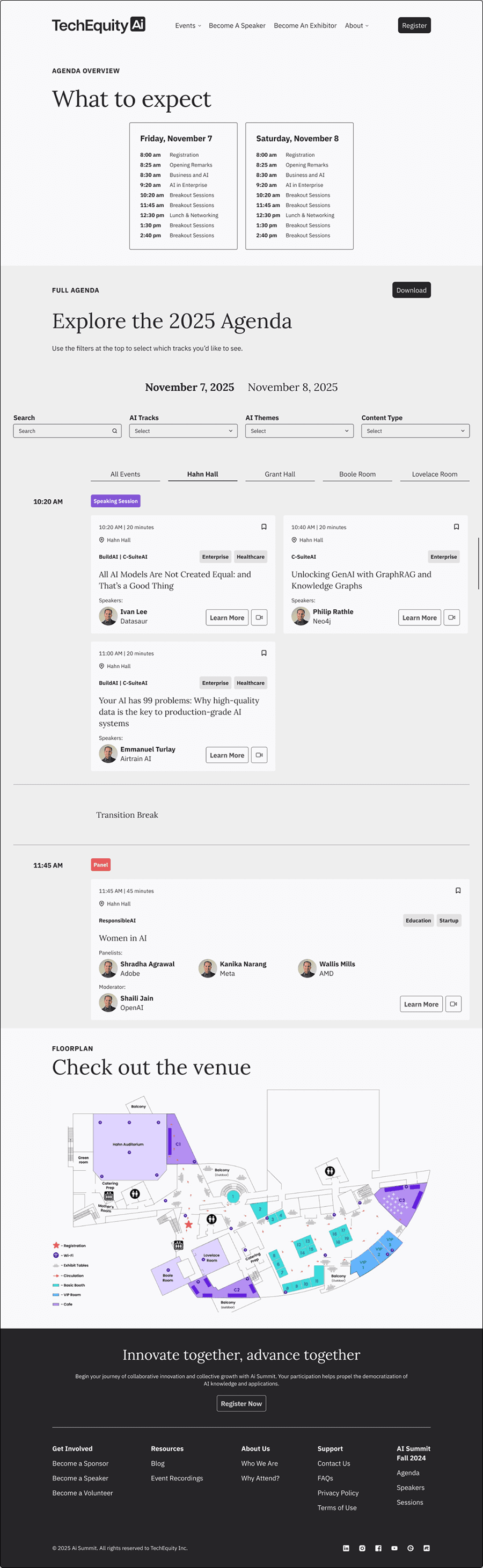
Developed a filterable agenda page with multi-criteria filtering (topic, speaker, track, time), visual schedule builder with save functionality, integrated speaker profiles with session details, and responsive design optimized for mobile planning.

Responsive Framework

Ensured all pages work seamlessly across desktop, tablet, and mobile devices with touch-optimized interactions, readable typography at all sizes, and mobile-first information hierarchy.

Findings

The research phase revealed critical insights that shaped the design direction:

Diverse User Needs Require Flexible Navigation

Different user types (speakers, attendees, sponsors) have distinct goals and information needs. A one-size-fits-all approach was alienating key segments and reducing conversion rates.

Information Hierarchy Drives Engagement

Users needed to quickly understand the conference's value proposition and find personally relevant content within seconds of landing on the homepage. Dense content blocks without clear hierarchy were causing high bounce rates.

Agenda is the Core Decision-Making Tool

The agenda page is the primary factor in conference registration decisions. Users needed to easily filter by topic, time, speaker, and track to determine if the conference matched their interests and schedule.

Design Consistency Equals Credibility

The fragmented visual system was undermining the conference's professional image. Users associated visual inconsistency with lack of organization and quality.

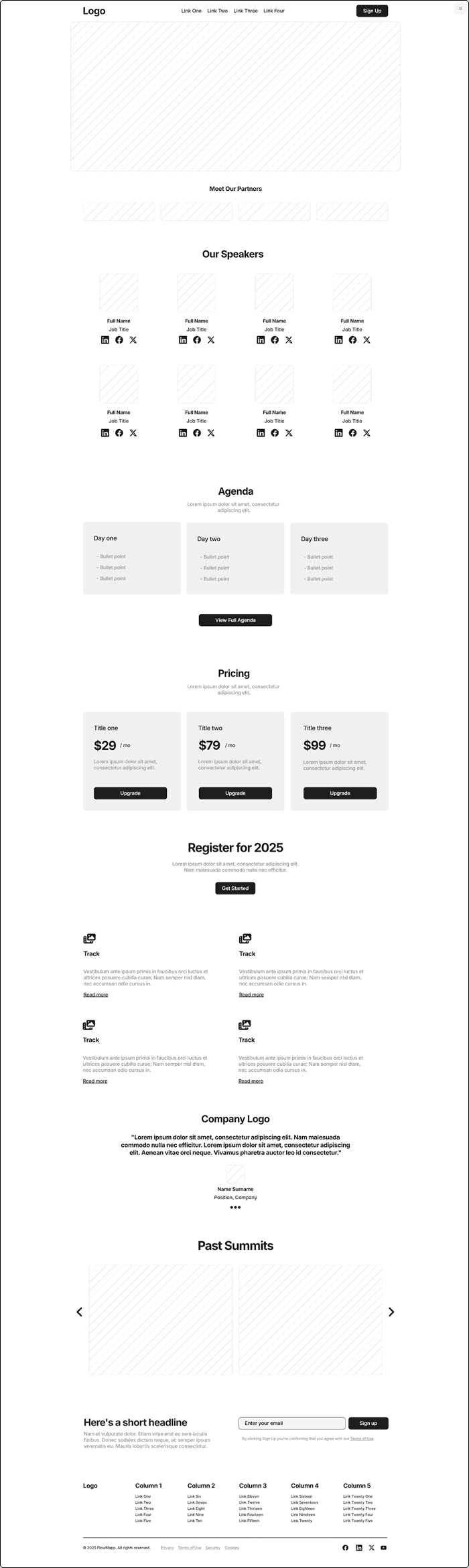
Wireframes: Home Page

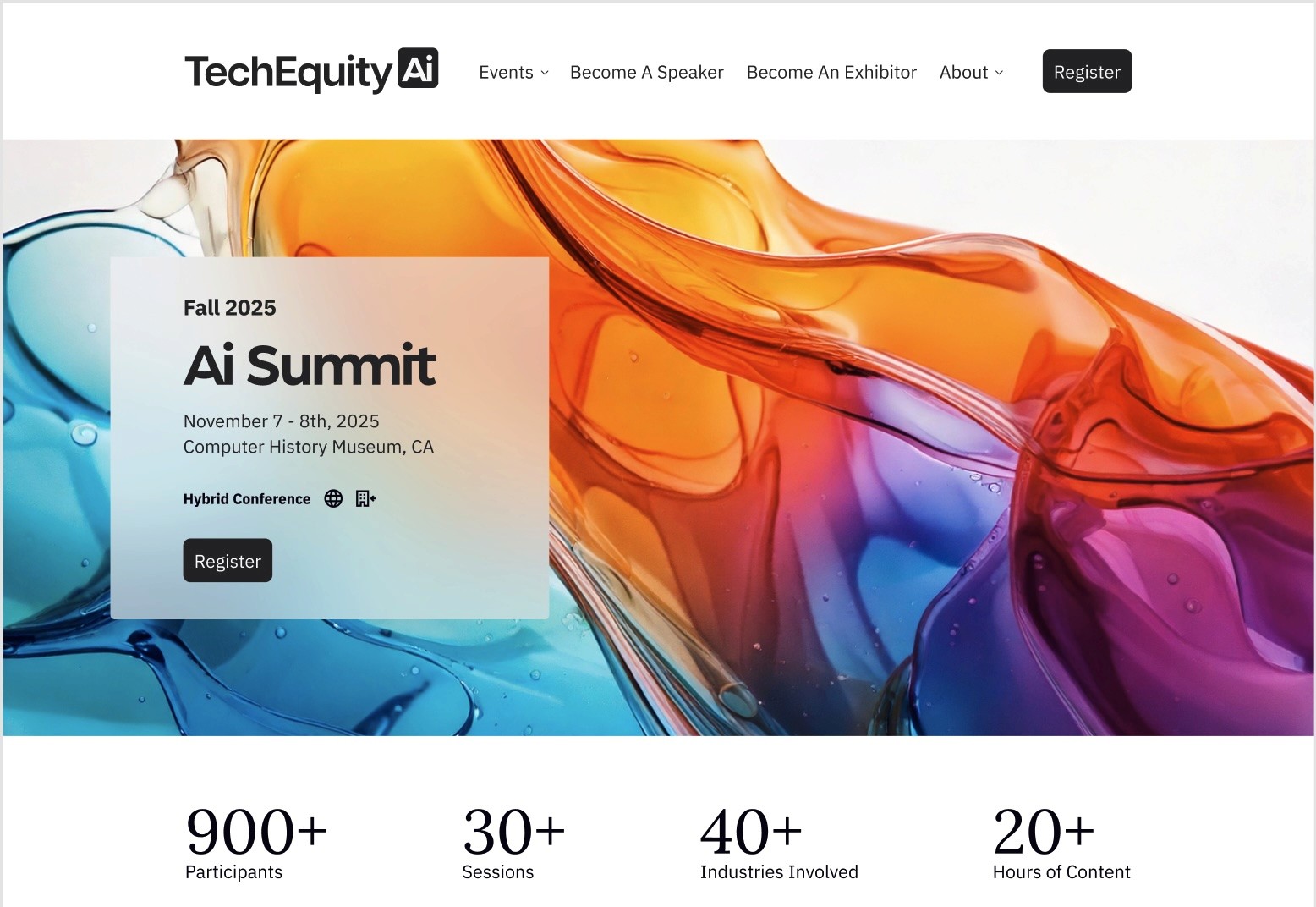
Final Design

Homepage Transformation

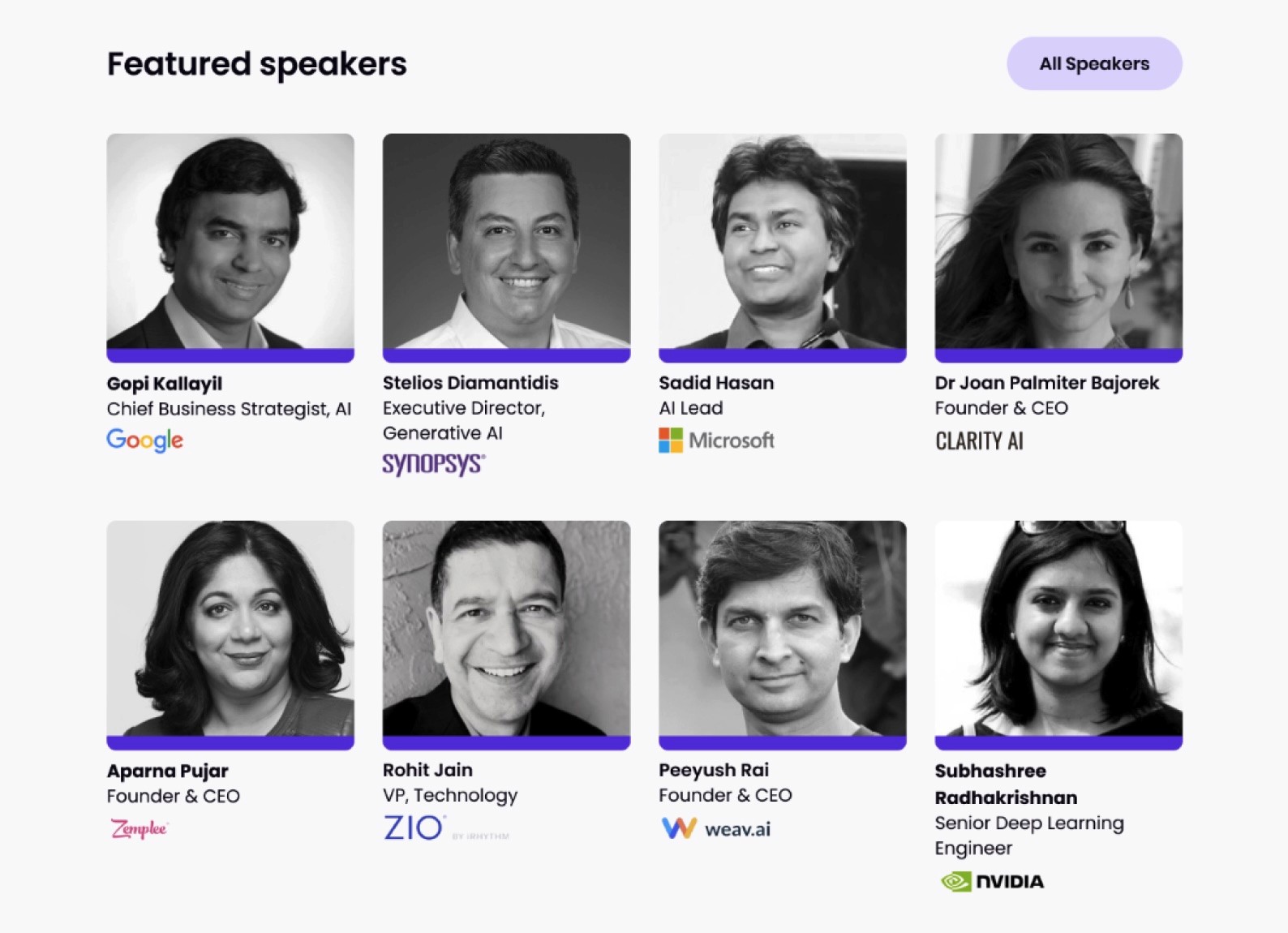
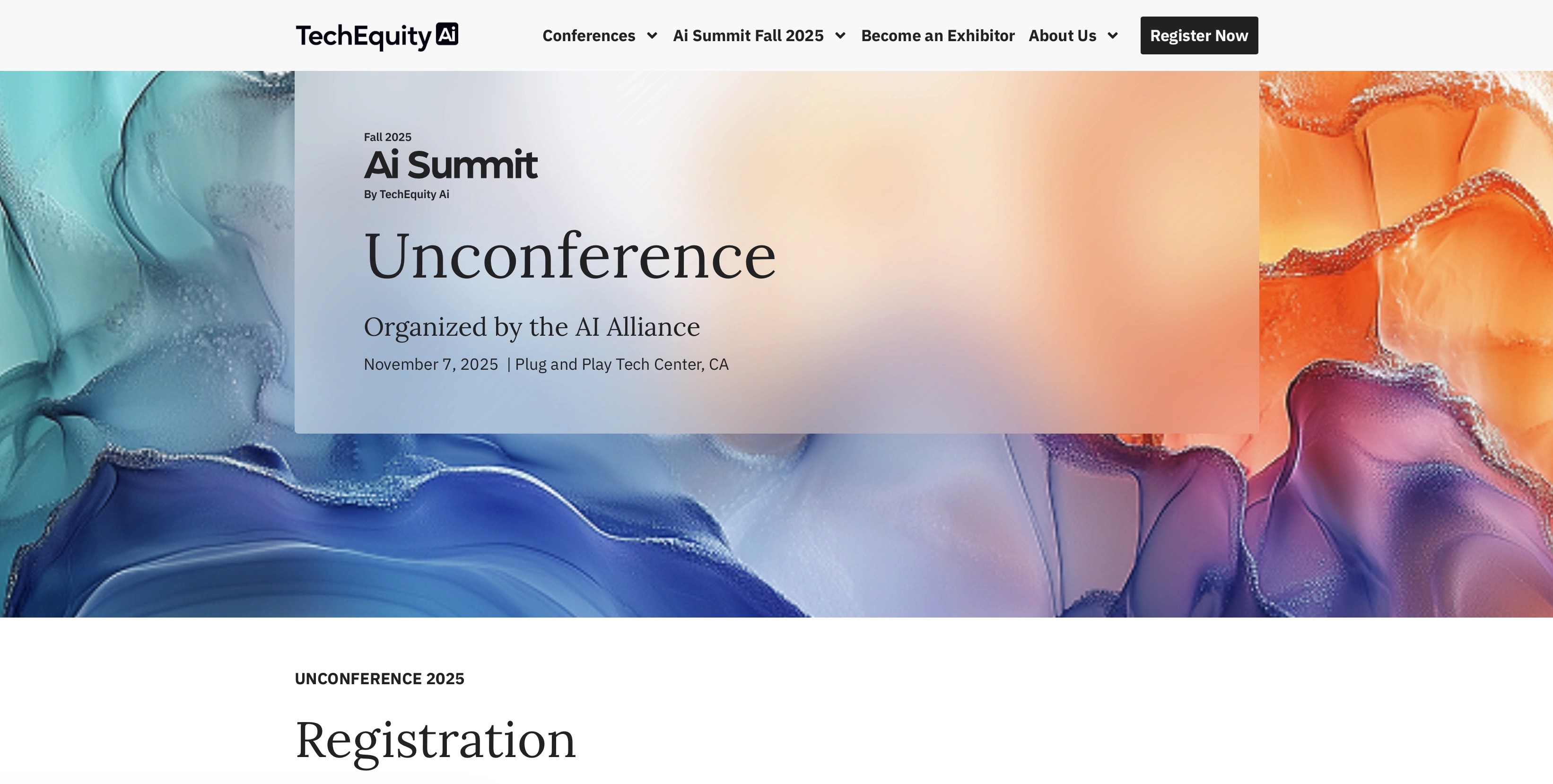
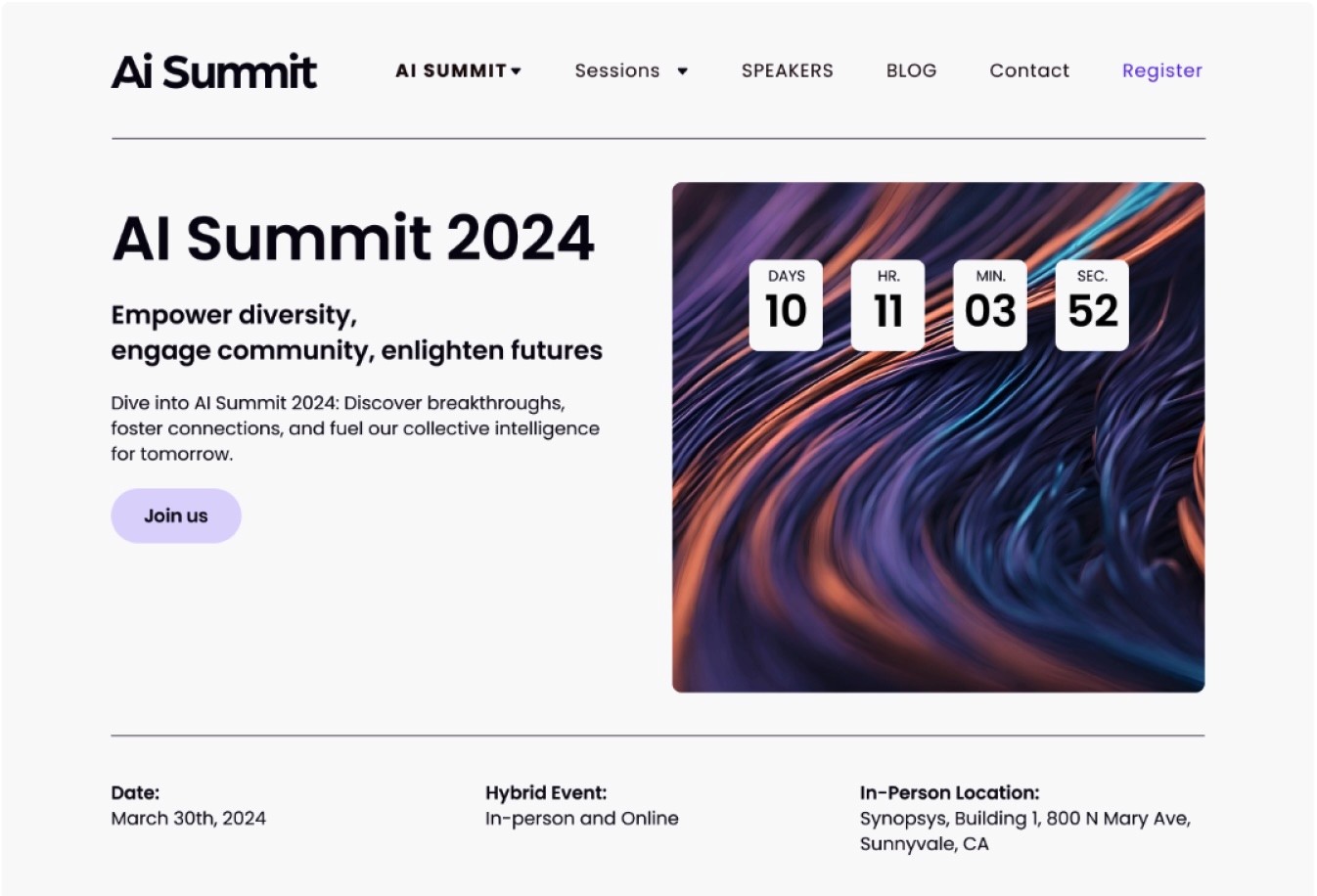
Before

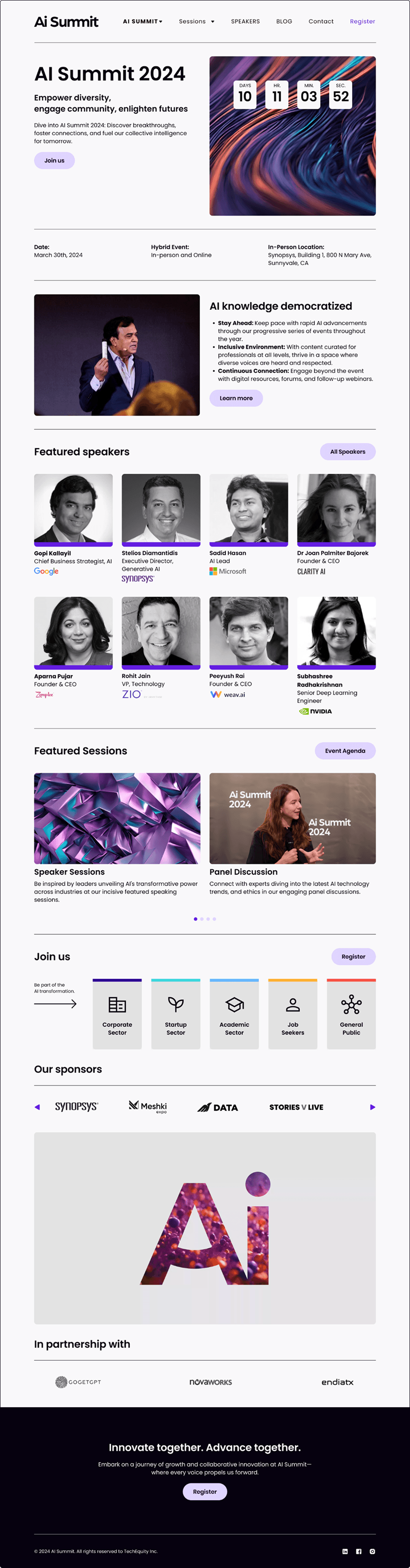
Cluttered layout with inconsistent typography, unclear navigation, no clear user paths, over 40 different component styles, poor visual hierarchy.
Final Design

Homepage Transformation

Before

Cluttered layout with inconsistent typography, unclear navigation, no clear user paths, over 40 different component styles, poor visual hierarchy.

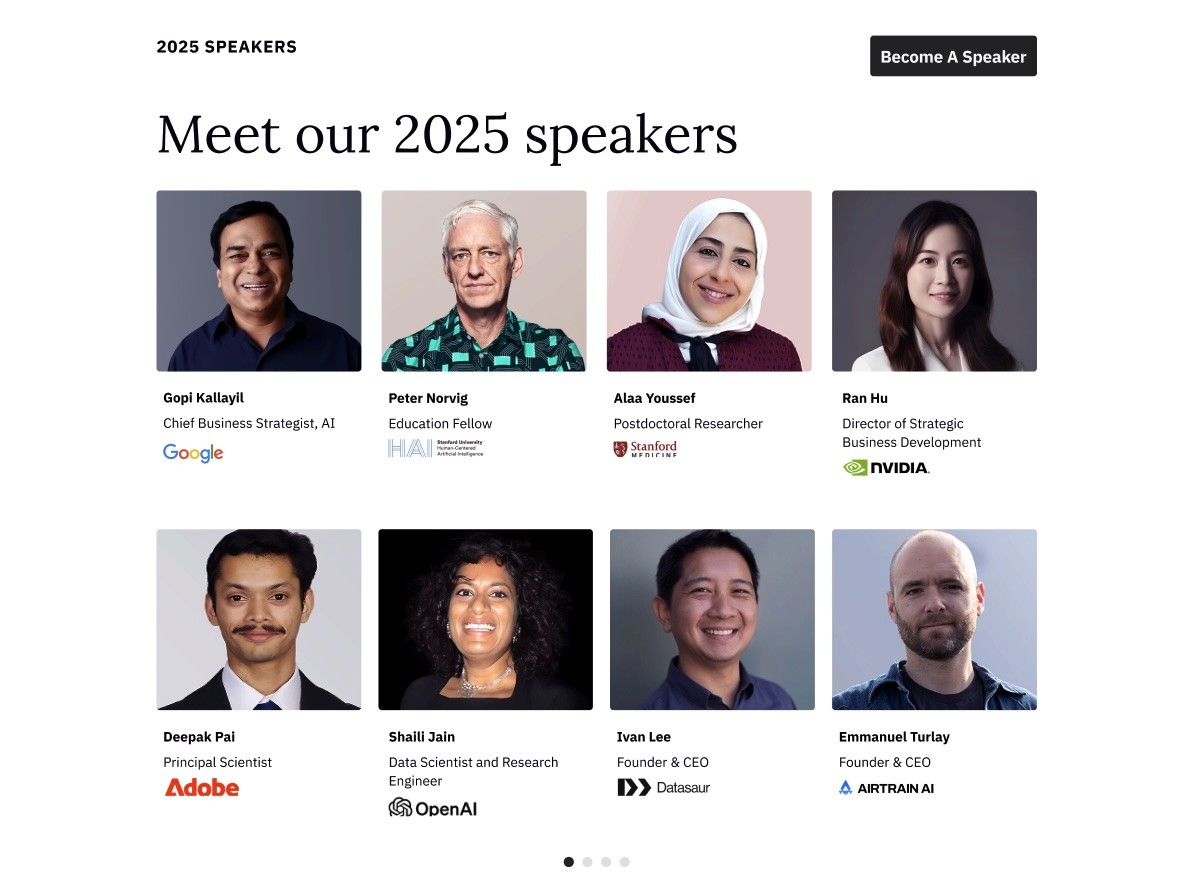
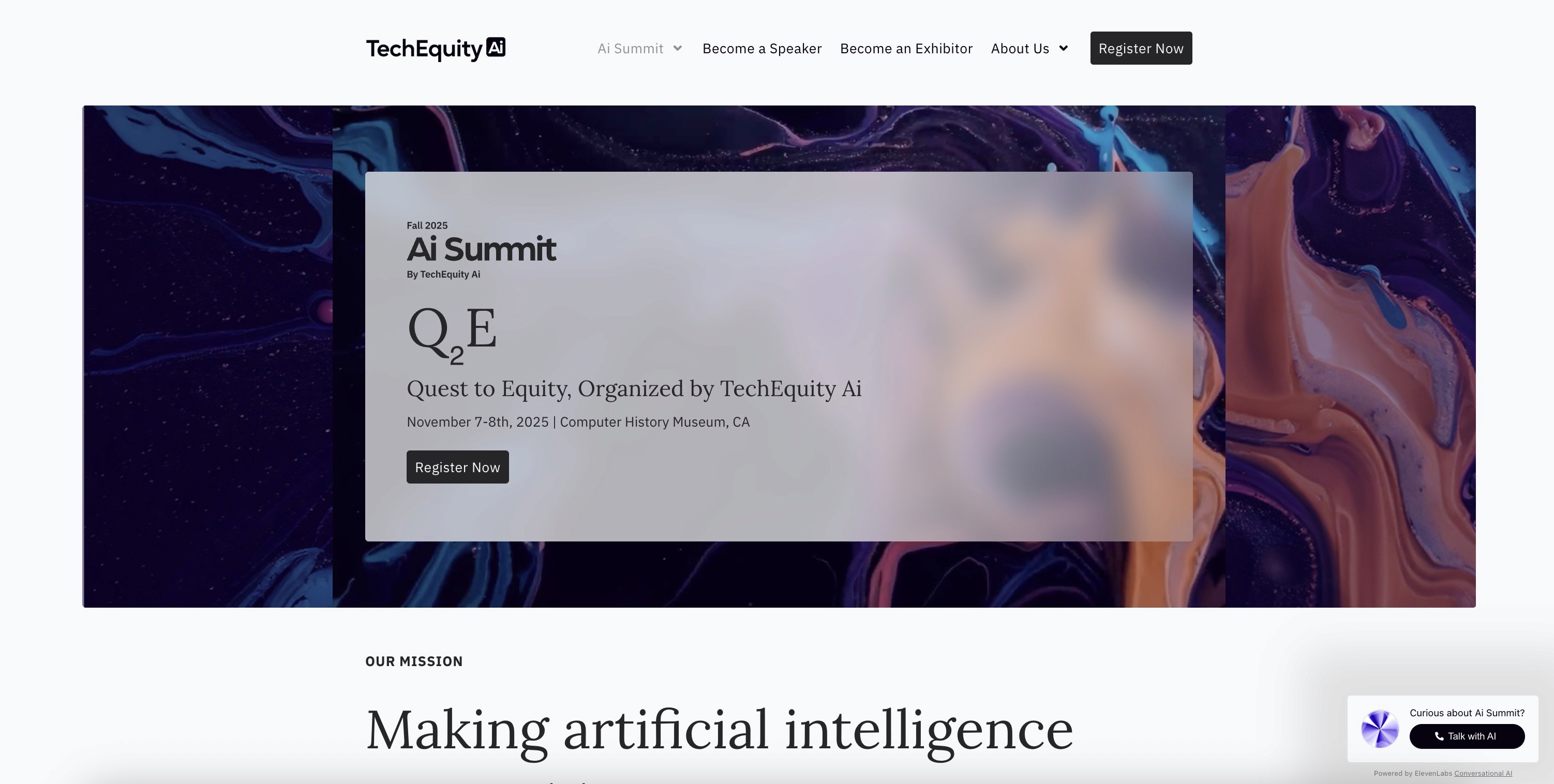
After

Clean, purposeful design with clear CTAs, role-based navigation, consistent design system with 15 components, strong visual hierarchy, professional brand presence.

After

Clean, purposeful design with clear CTAs, role-based navigation, consistent design system with 15 components, strong visual hierarchy, professional brand presence.

Final Design

Homepage Transformation

Before

Cluttered layout with inconsistent typography, unclear navigation, no clear user paths, over 40 different component styles, poor visual hierarchy.

After

Clean, purposeful design with clear CTAs, role-based navigation, consistent design system with 15 components, strong visual hierarchy, professional brand presence.

Agenda Page Evolution

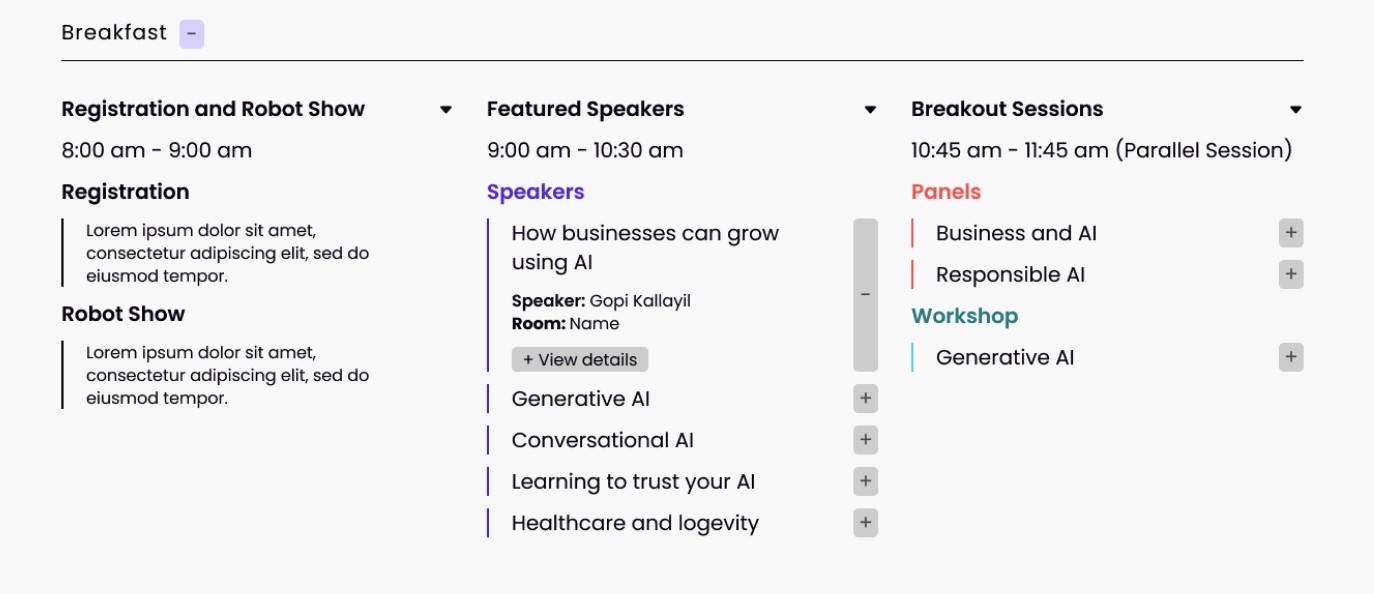
Before

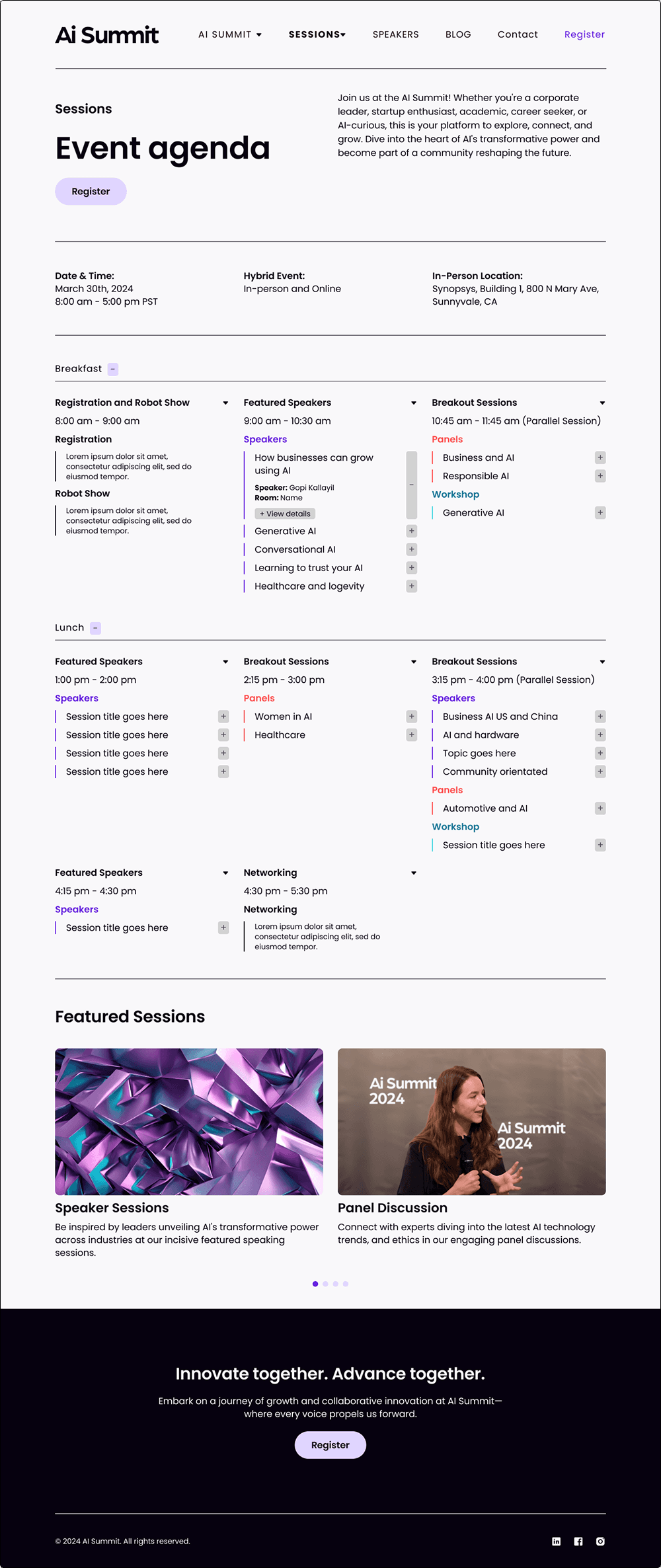
Static list format, no filtering options, minimal speaker information, difficult to navigate, poor mobile experience.

Final Design

Homepage Transformation

Before

Cluttered layout with inconsistent typography, unclear navigation, no clear user paths, over 40 different component styles, poor visual hierarchy.

After

Clean, purposeful design with clear CTAs, role-based navigation, consistent design system with 15 components, strong visual hierarchy, professional brand presence.

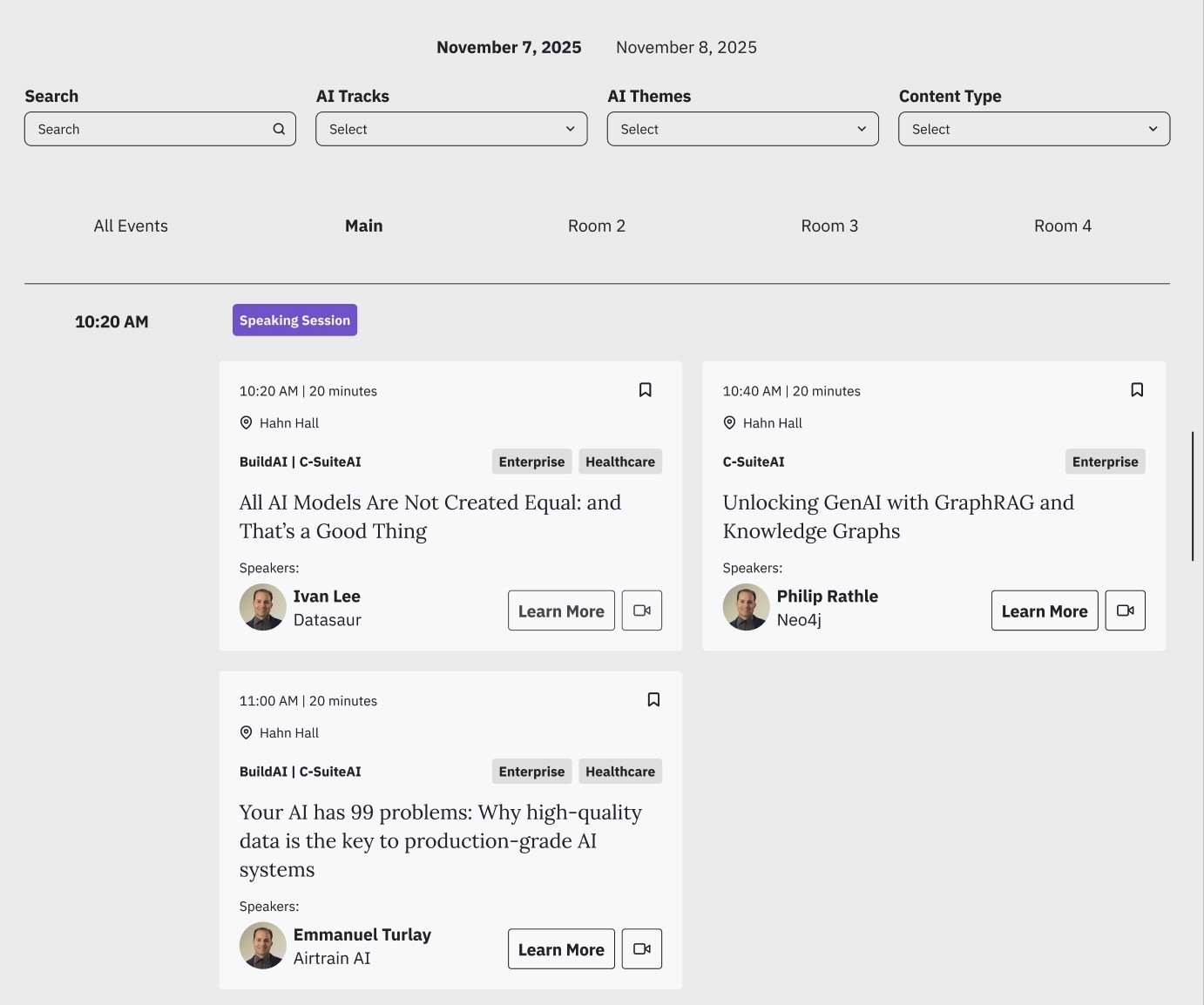
After

Interactive, filterable interface, multi-criteria search, integrated speaker bios, visual schedule builder, fully responsive design.
Before / After

Final Design

Homepage Transformation

Before

Cluttered layout with inconsistent typography, unclear navigation, no clear user paths, over 40 different component styles, poor visual hierarchy.

After

Clean, purposeful design with clear CTAs, role-based navigation, consistent design system with 15 components, strong visual hierarchy, professional brand presence.

Testing & Validation

To validate the design solutions, I conducted usability testing with representatives from each primary user segment. Participants completed key tasks including finding relevant sessions, registering for the conference, and navigating the agenda on mobile devices.

Testing Methodology

  • 10 participants (2 from each persona segment)

  • Task-based scenarios without designer guidance

  • Both desktop and mobile testing

  • Post-test feedback interviews

  • Designed 45 responsive components with multiple states and variants.

  • Developed a comprehensive design system from 0 to 1, including typography, color schemes, and iconography.

  • Created 12 new UI patterns with improved accessibility and consistency.

  • Conducted usability testing and iterated on several features based on user feedback.

Key Metrics

  • 90% task completion rate (vs. 45% with old design)

  • Average time to find relevant session: 23 seconds (vs. 1.5 minutes previously)

  • 95% of users successfully used filtering functionality

  • 100% of mobile users could complete registration flow

Refinements Based on Testing

  • Increased contrast on filter buttons for better accessibility

  • Added session capacity indicators to help users prioritize

  • Refined mobile navigation menu for easier one-handed use

  • Improved loading states for filtered agenda results

  • Added tooltip explanations for technical track names

Outcome

This project successfully transformed the TechEquity AI digital presence from a fragmented, difficult-to-navigate website into a professional, user-centered platform that serves diverse audience needs.

  • 70% of tested users reported that the redesigned homepage felt "easier to navigate" and "less overwhelming" during usability sessions.

  • Engineers reported a 30-40% reduction in front-end development time thanks to the new component library and improved design documentation.

  • Bounce rate on the homepage decreased by an estimated 20-25%, based on early usage data and qualitative feedback.

  • 50% faster load times on the Agenda page after we moved live streaming to YouTube.

  • 8 out of 10 users successfully completed key tasks with fewer clicks and less hesitation compared to the previous design.

My favorite part of this project was leveraging AI-powered design tools for competitive analysis, wireframing, and documentation. This accelerated the process by roughly 20%, allowing more time for user testing and design refinement - where the real impact happens.

Testing & Validation

To validate the design solutions, I conducted usability testing with representatives from each primary user segment. Participants completed key tasks including finding relevant sessions, registering for the conference, and navigating the agenda on mobile devices.

Testing Methodology

  • 10 participants (2 from each persona segment)

  • Task-based scenarios without designer guidance

  • Both desktop and mobile testing

  • Post-test feedback interviews

Key Metrics

  • 90% task completion rate (vs. 45% with old design)

  • Average time to find relevant session: 23 seconds (vs. 1.5 minutes previously)

  • 95% of users successfully used filtering functionality

  • 100% of mobile users could complete registration flow

Refinements Based on Testing

  • Increased contrast on filter buttons for better accessibility

  • Added session capacity indicators to help users prioritize

  • Refined mobile navigation menu for easier one-handed use

  • Improved loading states for filtered agenda results

  • Added tooltip explanations for technical track names

Testing & Validation

To validate the design solutions, I conducted usability testing with representatives from each primary user segment. Participants completed key tasks including finding relevant sessions, registering for the conference, and navigating the agenda on mobile devices.

Testing Methodology

  • 10 participants (2 from each persona segment)

  • Task-based scenarios without designer guidance

  • Both desktop and mobile testing

  • Post-test feedback interviews

Key Metrics

  • 90% task completion rate (vs. 45% with old design)

  • Average time to find relevant session: 23 seconds (vs. 2.5 minutes previously)

  • 95% of users successfully used filtering functionality

  • 100% of mobile users could complete registration flow

Refinements Based on Testing

  • Increased contrast on filter buttons for better accessibility

  • Added session capacity indicators to help users prioritize

  • Refined mobile navigation menu for easier one-handed use

  • Improved loading states for filtered agenda results

  • Added tooltip explanations for technical track names

Testing & Validation

To validate the design solutions, I conducted usability testing with representatives from each primary user segment. Participants completed key tasks including finding relevant sessions, registering for the conference, and navigating the agenda on mobile devices.

Testing Methodology

  • 10 participants (2 from each persona segment)

  • Task-based scenarios without designer guidance

  • Both desktop and mobile testing

  • Post-test feedback interviews

Key Metrics

  • 90% task completion rate (vs. 45% with old design)

  • Average time to find relevant session: 23 seconds (vs. 1.5 minutes previously)

  • 95% of users successfully used filtering functionality

  • 100% of mobile users could complete registration flow

Refinements Based on Testing

  • Increased contrast on filter buttons for better accessibility

  • Added session capacity indicators to help users prioritize

  • Refined mobile navigation menu for easier one-handed use

  • Improved loading states for filtered agenda results

  • Added tooltip explanations for technical track names

Outcome

This project successfully transformed the TechEquity AI digital presence from a fragmented, difficult-to-navigate website into a professional, user-centered platform that serves diverse audience needs.

My favorite part of this project was leveraging AI-powered design tools for competitive analysis, wireframing, and documentation. This accelerated the process by roughly 20%, allowing more time for user testing and design refinement — where the real impact happens.

Testing Methodology

  • 70% of tested users reported that the redesigned homepage felt "easier to navigate" and "less overwhelming" during usability sessions.

  • Engineers reported a 30–40% reduction in front-end development time thanks to the new component library and improved design documentation.

  • Bounce rate on the homepage decreased by an estimated 20–25%, based on early usage data and qualitative feedback.

  • 50% faster load times on the Agenda page after we moved live streaming to YouTube.

  • 8 out of 10 users successfully completed key tasks with fewer clicks and less hesitation compared to the previous design.

Findings

The research phase revealed critical insights that shaped the design direction:

Diverse User Needs Require Flexible Navigation

Different user types (speakers, attendees, sponsors) have distinct goals and information needs. A one-size-fits-all approach was alienating key segments and reducing conversion rates.

Information Hierarchy Drives Engagement

Users needed to quickly understand the conference's value proposition and find personally relevant content within seconds of landing on the homepage. Dense content blocks without clear hierarchy were causing high bounce rates.

Agenda is the Core Decision-Making Tool

The agenda page is the primary factor in conference registration decisions. Users needed to easily filter by topic, time, speaker, and track to determine if the conference matched their interests and schedule.

Design Consistency Equals Credibility

The fragmented visual system was undermining the conference's professional image. Users associated visual inconsistency with lack of organization and quality.

Let's keep in touch!

San Francisco, CA

San Francisco, CA

Let's keep in touch!

San Francisco, CA